
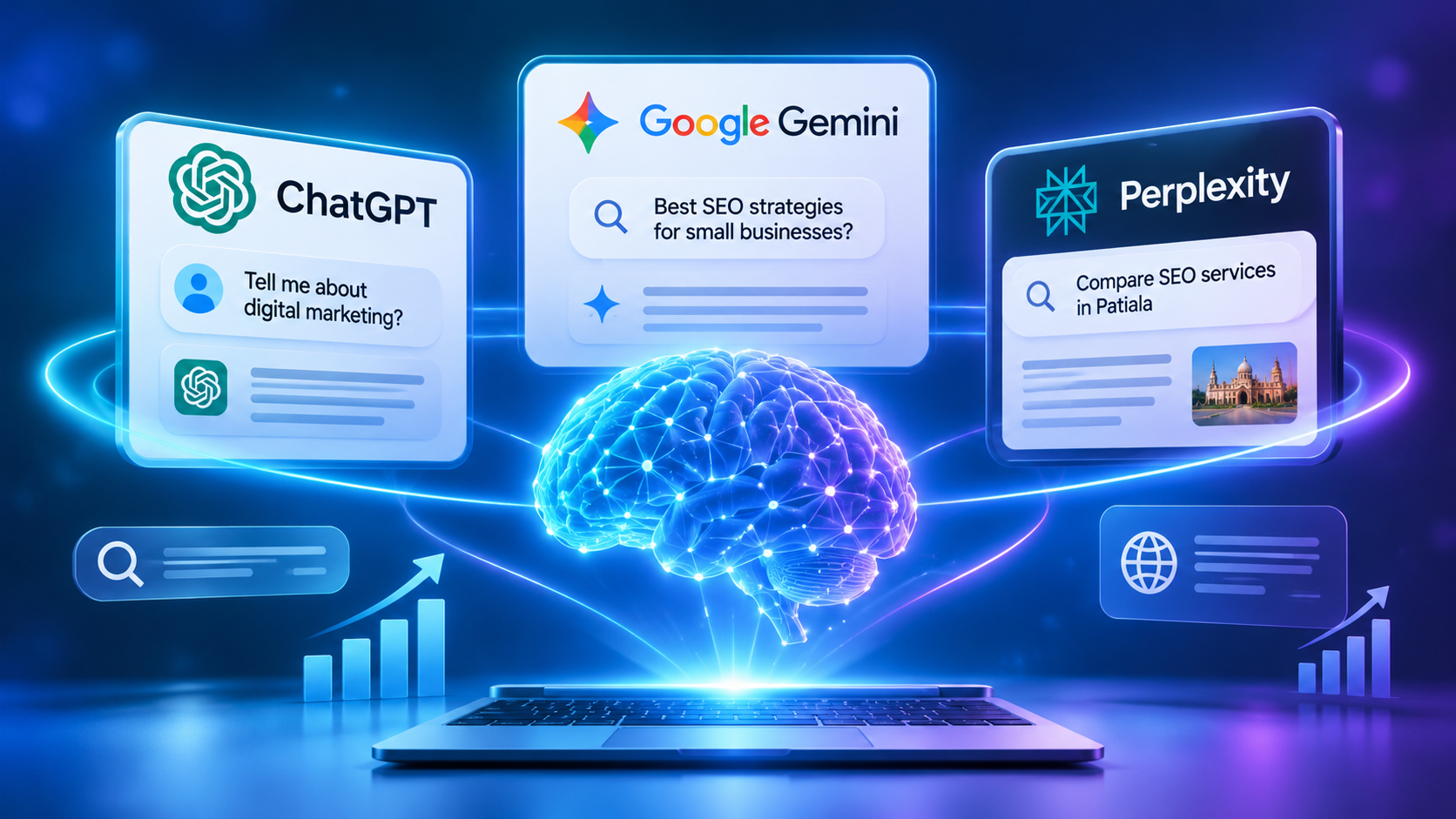

People no longer rely only on Google to find information online. They’re also asking ChatGPT for recommendations, using Gemini to explore complex topics and turning to Perplexity for answers supported by sources. This shift is changing how customers discover businesses, compare services and make purchasing decisions.
For businesses, the message is clear: ranking on Google is still important, but being visible in AI-generated answers is becoming another part of a strong online marketing strategy.
What Is Changing in the Way People Search Online?
Online search is moving from simple keyword-based queries towards conversational, AI-powered experiences. Instead of typing a few words into a search box, users can now ask detailed questions, request comparisons and explore follow-up questions without starting a new search.
For example, someone looking for a digital marketing agency might search Google for:
- Digital marketing agency in Patiala.
- Best SEO services for small businesses.
- How can I improve my website’s Google ranking?
With AI-powered search, the same person might ask: “Which digital marketing strategies can help a small business generate more qualified leads, and what should I look for when choosing an agency?”
The difference is important. Search engines are increasingly helping users understand a topic rather than simply displaying websites containing matching keywords.
How Are ChatGPT, Gemini and Perplexity Changing Search?
ChatGPT, Gemini and Perplexity offer different ways to discover and understand online information. Each platform has its own approach to answering questions, retrieving information and presenting sources.
1. ChatGPT: Making Search More Conversational
ChatGPT allows users to ask questions naturally, explore subjects and receive organised answers. Its web search capabilities also help users find current information and access relevant sources.
For example, a business owner can ask ChatGPT to compare SEO strategies, explain website optimisation or suggest ways to improve online visibility.
This changes the discovery process because users can move from a general question to a more specific requirement through follow-up conversations.
What businesses should do: Publish helpful, well-structured content that answers real customer questions. Explain services clearly, provide practical information and support important claims with reliable sources.
2. Gemini: Connecting AI With Google’s Ecosystem
Google Gemini helps users research topics, understand information and work with different types of content. Its integration with Google’s wider ecosystem makes it an important part of the changing search experience.
Users can explore subjects, ask detailed questions and investigate different solutions. Google Search is also incorporating AI-powered experiences, including AI Overviews and AI Mode.
For businesses, this makes useful website content, clear business information and a technically accessible website important considerations.
What businesses should do: Strengthen website structure, maintain accurate business information, create original content and follow sound SEO practices. Don’t treat AI visibility as a replacement for conventional Google optimisation.
3. Perplexity: Bringing Sources Into AI Answers
Perplexity focuses on answering questions using retrieved online information and presenting source links alongside its responses.
This is particularly useful for people researching products, comparing services or checking information before making decisions.
For example, someone researching website design companies may ask Perplexity to compare service offerings, website features and relevant business information.
What businesses should do: Create informative pages that demonstrate subject knowledge. Use clear explanations, relevant evidence, accurate service descriptions and trustworthy references wherever appropriate.
Traditional SEO vs AI Search: What’s the Difference?
Traditional SEO and AI search optimisation share the same foundation: useful content, technical accessibility and trustworthy information. However, they differ in how information is presented to users.
| Traditional SEO | AI-powered search |
| Focuses on search result rankings | Focuses on useful answers and source visibility |
| Targets keywords and search intent | Addresses conversational questions and context |
| Often presents website links | Can summarise information from multiple sources |
| Measures rankings and organic clicks | Also considers mentions, citations and AI referrals |
| Helps users discover web pages | Helps users understand information directly |
Businesses shouldn’t abandon traditional SEO. Instead, they should build on it with Answer Engine Optimisation (AEO) and Generative Engine Optimisation (GEO).
What Are SEO, AEO and GEO, and Why Do They Matter?
These three approaches support different parts of online visibility.
Search Engine Optimisation (SEO)
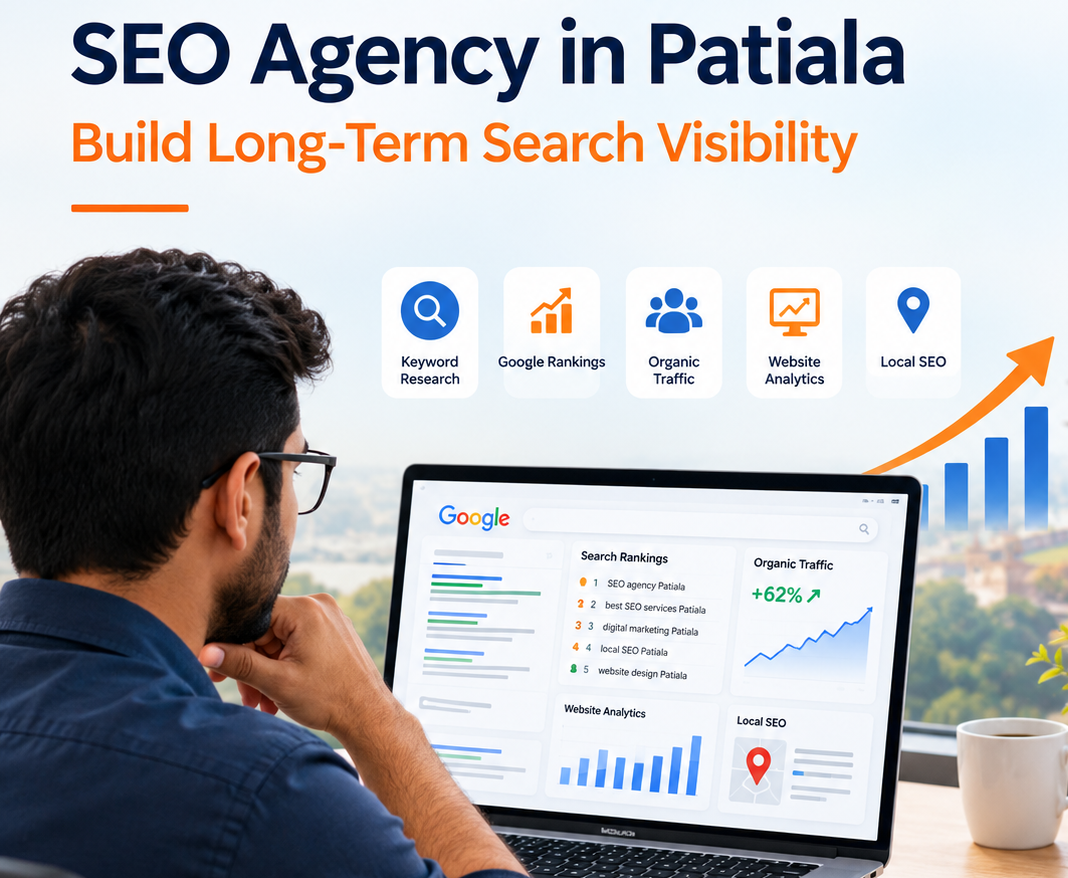
SEO improves a website’s visibility in traditional search results. It includes keyword research, technical improvements, internal linking, content development and website performance.
A strong digital marketing strategy helps businesses build a sustainable online presence and attract relevant visitors.
Answer Engine Optimisation (AEO)
AEO focuses on making website information easier for answer engines to understand and use when responding to questions.
Practical AEO techniques include:
- Answering common customer questions directly.
- Using descriptive headings and clear paragraphs.
- Adding relevant FAQs.
- Providing accurate and consistent information.
- Using appropriate structured data.
Generative Engine Optimisation (GEO)
GEO focuses on improving the likelihood that a brand’s information is discovered, understood, mentioned or cited in generative AI responses.
It involves creating original, useful content, demonstrating expertise, building brand credibility and maintaining consistent information across relevant online platforms.
Neither AEO nor GEO guarantees an AI recommendation. Their purpose is to improve the quality and discoverability of information available to these systems.
Why Should Businesses Prepare for AI Search?
AI-powered search is changing the way potential customers discover brands. A business might have a well-designed website and still miss opportunities if its content doesn’t answer the questions people are asking.
Consider a local business in Patiala offering website designing, SEO and social media marketing. Its potential customers may use Google, ChatGPT, Gemini or Perplexity to compare agencies before making contact.
To improve discoverability, businesses should focus on the following areas.
1. Create Content That Answers Real Questions
Write content around the problems customers actually want to solve. Instead of publishing generic articles about digital marketing, explain topics such as:
- How can a small business generate leads online?
- What makes a website SEO-friendly?
- Is SEO better than paid advertising?
- How can a business improve its visibility in AI search?
- What should businesses look for in a digital marketing agency?
Direct answers make content easier for readers to understand and provide useful context for AI systems.
2. Build a Clear and Helpful Website Structure
A well-organised website helps visitors and search engines understand what a business offers.
Every important service should have a dedicated page explaining its features, benefits, audience and business value. Use descriptive headings, relevant internal links and straightforward navigation.
Businesses investing in professional digital marketing solutions should also pay attention to website design, mobile usability and page speed.
3. Demonstrate Experience and Business Credibility
Trust matters in both traditional and AI-powered search. Businesses should provide accurate company information, genuine customer feedback, relevant examples of their work and clear service descriptions.
For example, a digital marketing agency can demonstrate its knowledge through practical SEO guides, campaign insights, website optimisation explanations and relevant industry experience.
Avoid publishing unsupported claims simply to make a brand appear more authoritative. Genuine information is more useful than exaggerated promises.
4. Use Structured Data Where Appropriate
Structured data helps search engines understand specific information about a website.
Businesses can use relevant Schema.org markup, including Article, Organisation, LocalBusiness and BreadcrumbList, depending on the page and its content.
FAQPage markup should only be implemented where appropriate, and businesses shouldn’t assume that adding schema automatically secures AI citations or enhanced search appearances.
5. Monitor Visibility Beyond Google Rankings
Google rankings alone don’t provide a complete picture of modern search visibility.
Businesses should also monitor:
- Organic impressions and clicks through Google Search Console.
- Website traffic through Google Analytics.
- Brand mentions in AI-generated responses.
- Referral visits from AI platforms.
- Search queries that generate enquiries.
- Changes in branded and non-branded visibility.
AI responses can change between queries and over time, so monitoring should involve repeated checks rather than relying on a single search.
How Can Businesses Prepare for the Future of Online Search?
The best approach is to combine traditional SEO with content strategies designed for AI-powered discovery.
Businesses should start with a technically sound website, publish original and useful information, answer customer questions and build a recognisable online presence.
It’s also important to remember that AI platforms don’t all retrieve or present information in the same way. A page appearing in one platform’s response doesn’t guarantee that it will appear in another.
For businesses in Patiala, Punjab and international markets, these changes create an opportunity to reach customers through more than one discovery channel.
At Kamal Media, the focus is on helping businesses strengthen their digital presence through SEO, website designing, social media marketing, performance marketing and branding. As online search continues to evolve, a balanced strategy can help businesses remain discoverable wherever their customers look for information.
Frequently Asked Questions
1. How are ChatGPT, Gemini and Perplexity changing online search?
ChatGPT, Gemini and Perplexity are making online search more conversational. Instead of relying only on lists of website links, users can ask detailed questions and receive summarised answers. This changes how people research businesses, compare services and discover information before making purchasing decisions.
2. Is AI search replacing traditional Google search?
No. Traditional Google search remains important, but AI-powered features are changing how people access information. Many users still browse search results, while others use conversational AI tools for research and comparisons. Businesses should maintain their traditional SEO efforts while preparing for AI-driven discovery.
3. What is the difference between ChatGPT and Perplexity?
ChatGPT is a conversational AI assistant that supports research, writing and web search. Perplexity is an AI-powered answer engine that places particular emphasis on retrieving information and displaying source links. Both can help users research topics, but their interfaces and information presentation differ.
4. How does Google Gemini affect SEO?
Gemini is part of Google’s expanding AI ecosystem, while Google Search also offers AI-powered search experiences. Businesses should continue focusing on helpful content, technical SEO, relevant information and website accessibility. There is no separate ranking shortcut that guarantees visibility in Gemini.
5. What is Generative Engine Optimisation (GEO)?
Generative Engine Optimisation is the practice of improving a brand’s discoverability in AI-generated answers. It involves creating original content, explaining topics clearly, demonstrating expertise and maintaining reliable business information. GEO complements traditional SEO rather than replacing it.
6. How can my business appear in ChatGPT search results?
Start by building a technically accessible website with accurate information about your business, services and expertise. Publish helpful content that answers customer questions and maintain a consistent online presence. ChatGPT visibility cannot be guaranteed, but these practices improve the quality and discoverability of your information.
7. Is Answer Engine Optimisation different from SEO?
Yes. SEO primarily improves visibility in search engine results, while AEO focuses on making information useful and understandable for answer-based search experiences. Both approaches overlap in content quality, website structure and technical accessibility. A well-planned strategy should include both.
8. Does AI search reduce website traffic?
AI-generated answers can satisfy some questions without requiring users to visit a website. However, users may still click through when they need detailed explanations, original information, products or services. Businesses should focus on attracting relevant visitors rather than measuring success through traffic alone.
9. How can Kamal Media help businesses improve online visibility?
Kamal Media provides digital marketing services, including SEO, website designing, social media marketing and performance marketing. Its approach focuses on understanding business goals and developing suitable strategies to improve online visibility, strengthen branding and attract relevant potential customers.
10. Will traditional SEO still matter in the future?
Yes. Search engines and AI platforms need accessible, relevant and useful information. Traditional SEO practices such as technical optimisation, content quality, internal linking and website performance remain important foundations. Businesses should strengthen these fundamentals while adapting their content for changing search experiences.
Help Your Business Stay Visible as Search Evolves
Search behaviour is changing, but the goal remains the same: helping potential customers find reliable information and the right business.
If you’re planning to improve your website’s search visibility, explore the digital marketing services offered by Kamal Media and discuss a strategy that supports your business goals.